5 min read
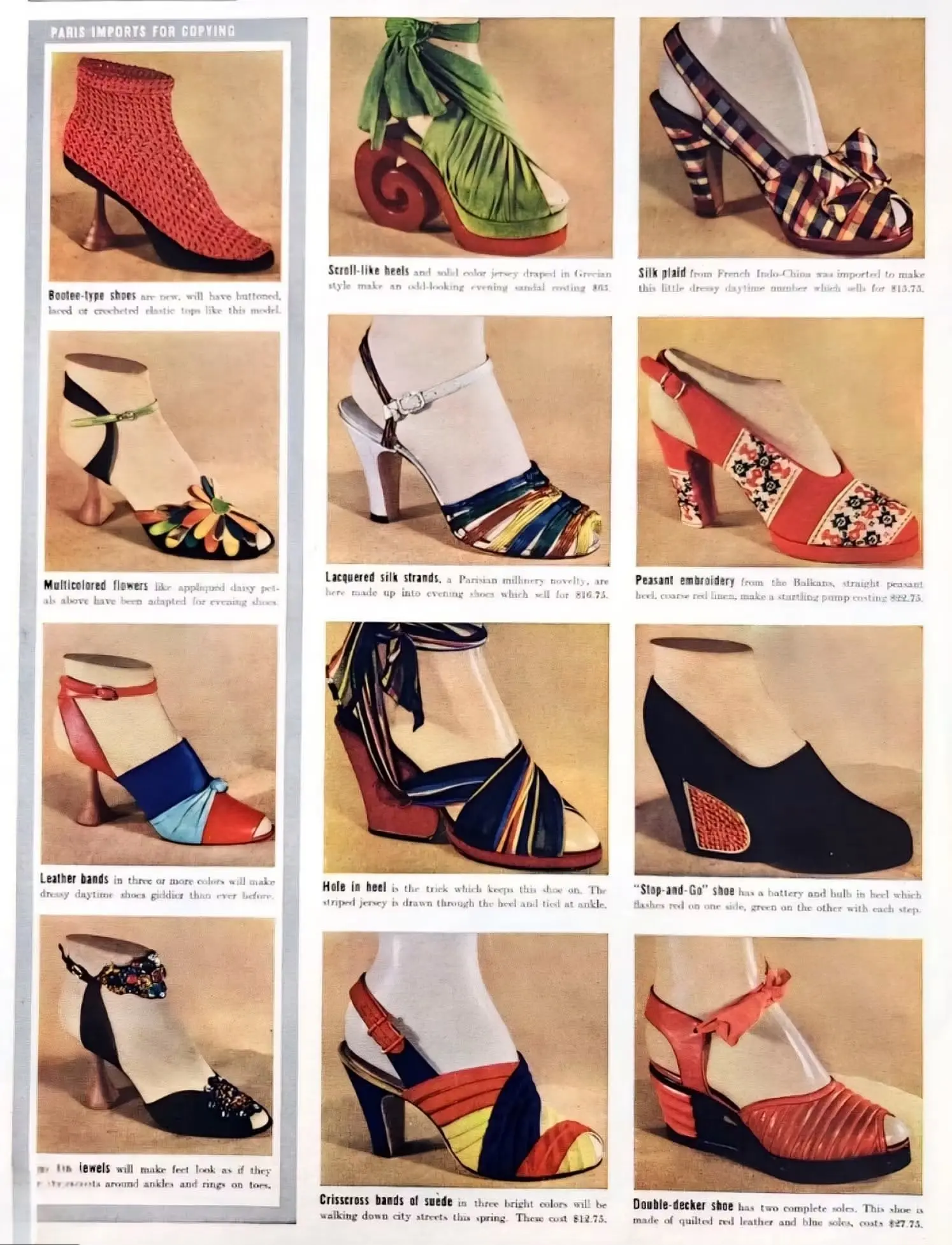
A closer look at a vintage fashion page featuring floral decoration, embroidery, colourful straps and sculptural heels, revealing different approaches to shoe design.
Article Content
When Shoes Become a Space for Experimentation: Colour, Materials and Unexpected Heels
A scroll-shaped heel, multicoloured straps, petals arranged across a shoe’s front and a design described as lighting up during walking.
This vintage page brings together twelve different models, presenting footwear as a space for experiments in form, materials and decoration.
- The Heel as Part of the Idea
At the top of the middle column, a green sandal has a red curled heel, described in the caption as scroll-like.
Another caption explains that fabric passes through a hole in the heel and ties at the ankle. At the bottom right, a design is described as having two complete soles.
These examples draw attention to heels and soles as visual elements alongside the shoe’s upper.
- A Variety of Materials and Decoration
The captions identify details including plaid silk, lacquered silk strands, leather, suede and embroidery.
The left-hand column features multicoloured petal decoration and another design with jewel-like embellishment at the ankle and forefoot. It also includes an ankle-covering model with an openwork upper described as crocheted.
These descriptions come from the page and its captions. The reproduction cannot independently verify every material or construction technique.
- Colour Distinguishes the Components
Red, blue, yellow and green recur throughout the page. Visually, contrasting colours distinguish straps, fronts, heels and soles.
A useful question when studying each design is: does the colour follow the boundaries of the shoe’s components, or create additional decorative divisions?
- A Shoe Described as Lighting Up
One model is labelled “Stop-and-Go.” Its caption describes a battery and bulb in the heel, with red and green lights flashing as the wearer walks.
This reports the page’s claim. A still image cannot establish how effectively the mechanism worked or how widely it was adopted.
- Historical Context
The Victoria and Albert Museum explains that shoemaking combines numerous components and materials, including leather, textiles, metal and wood.
Museo Ferragamo provides a separate documented example of experimentation: the Rainbow sandal, dated 1938, with a cork sole and heel covered in coloured suede.
This does not establish that the shoes on the supplied page were designed by Ferragamo or date from the same year. The reproduction does not provide a clear publication date or complete attribution for all the models.
Reading the Details
The page offers an opportunity to examine the relationship between upper, heel and sole, and to consider how a material or ornament can lead a design.
An unusual appearance does not establish comfort or ease of walking. Fit and performance require separate assessment.
From the Memory of Days
Rana Elgogary ᥫ᭡
Expert Tip
«Study the upper, heel and sole separately, then consider how their colours and materials work together.»
Conclusion
The page explores varied materials, colours, ornament and heel shapes. It offers a study of footwear experimentation while distinguishing visible details from caption claims and avoiding unsupported dates or attributions.