5 min read
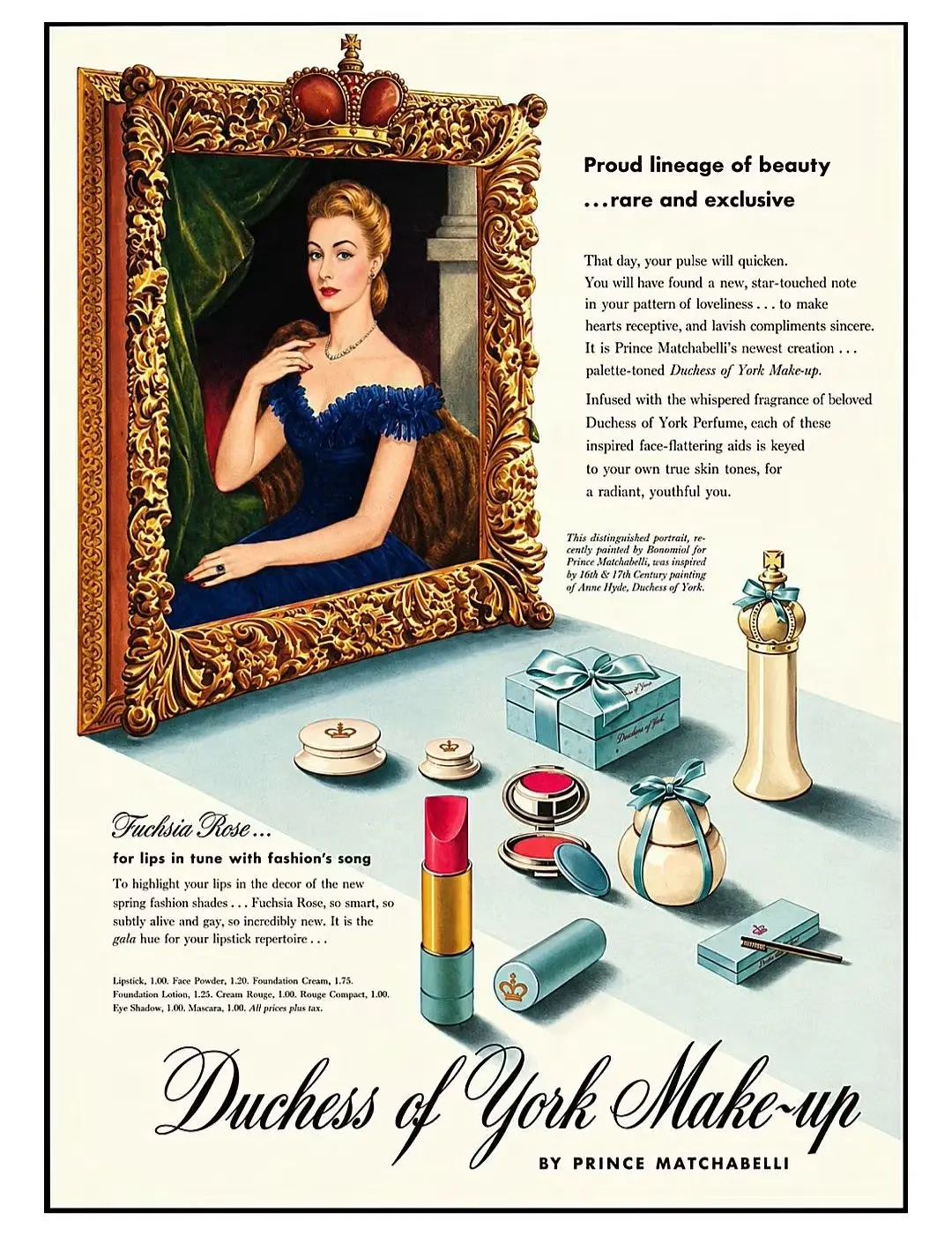
A closer look at a Prince Matchabelli cosmetics advertisement combining portraiture, an ornate gold frame, crown motifs and coordinated packaging.
Article Content
Duchess of York: When Beauty Advertising Borrowed the Language of Aristocratic Portraiture
A woman in a blue gown sits within an ornate gold frame topped by a crown. Gold and blue-green cosmetic containers appear below, alongside a vivid pink lipstick.
The advertisement presents Duchess of York Make-up by Prince Matchabelli, bringing cosmetics together with imagery associated with aristocratic portraiture.
- A Portrait Inspired by the Past
The small caption explains that the portrait was painted for Prince Matchabelli and inspired by depictions of Anne Hyde, Duchess of York, and sixteenth- and seventeenth-century painting.
It should therefore be read as an advertising image drawing on historical references, rather than an original historical portrait of the Duchess.
The Royal Collection documents portraits of Anne Hyde, who lived from 1637 to 1671, associated with Peter Lely’s work. This provides separate historical context without establishing the advertisement’s exact pictorial source.
- A Crown Connecting Image and Product
The crown appears above the frame and on some containers. Gold and blue-green recur throughout the packaging.
Visually, these details connect the name, portrait and products into a coordinated identity suggesting luxury. A title and crown motif do not, however, establish royal patronage or official endorsement.
- A Lip Colour at the Centre
The advertisement highlights a shade called Fuchsia Rose, presenting it as a complement to spring fashions.
It also lists face powder, foundation cream and lotion, rouge, eye shadow and mascara. The message extends from a single lip colour to a broader makeup collection.
- Reading the Beauty Promises
The copy associates the products with a radiant, youthful appearance, suitability for skin tones and the fragrance of Duchess of York perfume.
These are advertising descriptions and claims. The page does not provide test results, and the image cannot establish formulation, performance or individual suitability.
- What Does the Page Reveal?
Prices are listed, with tax additional. However, the supplied reproduction has no clear publication date, so it does not establish an exact year or support a direct comparison with current prices.
Its visual interest lies in the combination of art, naming, packaging and colour to give the products a story beyond their immediate function.
Look at the Story Behind the Packaging
This advertisement invites us to examine how images, language, colours and symbols shape a beauty product’s identity. Recognising those elements helps distinguish the impression an advertisement creates from the information it establishes.
From the Memory of Days
Rana Elgogary ᥫ᭡
Expert Tip
«When examining a vintage beauty advertisement, distinguish product information from the impression created around it.»
Conclusion
The Duchess of York advertisement uses portraiture, crown motifs and coordinated packaging to suggest luxury. Its reading distinguishes historical inspiration, visual identity and marketing claims.